Tile Match: Triple Puzzle Game
- 5.0
- Rating
- 100.00K
- Installs
- Free
- Price
 Analysis by App-foxy
My first impression of Tile Match: Triple Puzzle Game was that it understands the appeal of a small, low-pressure puzzle session. The idea is easy to grasp: I look for matching tiles, clear them in groups, and collect cooking-themed items as I work through the board. That familiar foundation makes it immediately approachable, but the cooking setting gives the otherwise abstract tile-clearing routine a warmer identity.
This is a free puzzle game from Big Cake Apps, aimed at Everyone and available for devices running Android 6.0 or later. It has reached over 100 thousand installs and holds a 5.0 average from around 15 thousand ratings, which suggests that its simple format has found a receptive audience. I would not treat those figures as a substitute for personal taste, though. Tile Match is deliberately straightforward, and that is both its strongest quality and its main limitation.
I spent time with it as the kind of game I might open between errands, while waiting for an appointment, or when I wanted something more active than scrolling but less demanding than a long strategy game. The result is a pleasant, accessible match-three experience with an offline-friendly identity. It suits players who enjoy visual sorting and gradual progress, while people looking for a deep story, competitive play, or complex puzzles may find it too restrained.
You May Also Like

 Pandora - Music & Podcasts
Pandora’s Music Is Easy to Start, but Harder to Recover
Pandora’s strength is its low-effort path from a seed to a station. Its weak spot is how much confidence it asks you to place in connection, setup, and quiet recovery.

 8 Ball Pool
 Is Built on Rivalries, Rematches, and Routine
A close look at the rivalries, rematches, shared routines, and unanswered safety questions that turn a quick pool match into a persistent mobile community.

 Samsung Music
’s Quiet Strength Is Playing What You Already Own
Its reach comes less from spectacle than from dependable access to a personal library. That simplicity is both the app’s strongest retention engine and its ceiling.

 AccuWeather: Weather Radar
AccuWeather Review: A Quick, Clear Forecast for Everyday Decisions
For everyday plans, the best forecast is the one you can understand quickly. AccuWeather makes rain timing, radar, and local conditions easy to act on, with a few trade-offs.

 Hill Climb Racing
Why Hill Climb Racing Still Turns Crashes Into One More Run
A tiny car, a bumpy hill and one more upgrade: Hill Climb Racing keeps resurfacing because its simple chaos makes every near-miss feel personal.

 AliExpress - Shopping App
AliExpress Makes Global Shopping Feel Personal, but Shoppers Bear the Risk
AliExpress turns a global marketplace into a pocket-sized discovery engine. Its reach is useful, its shopping loop compelling, and its trade-offs easy to miss.
More From Our News Desk
View All News


A warm visual language built around everyday objects
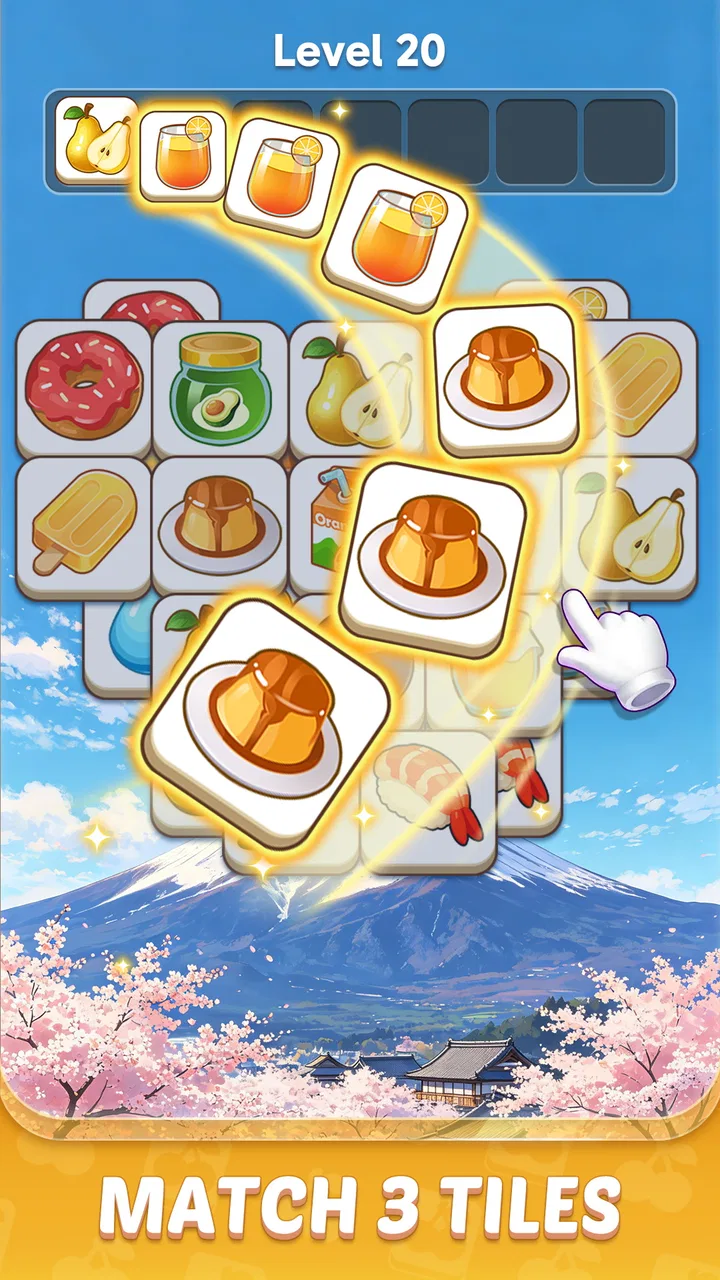
The cooking theme does useful work because it gives the tile collection a recognizable visual vocabulary. Instead of feeling like I am only removing colored shapes from an anonymous grid, I am handling objects associated with kitchens and food preparation. That small change makes the board easier to read emotionally: the setting feels domestic, light, and familiar rather than tense or futuristic.
Good puzzle art needs to do more than look attractive. It has to help me identify pieces quickly, especially when the board becomes busy. Here, the cooking focus creates a natural reason for varied objects to appear together. I can scan the board by shape and color, but I also get the satisfaction of noticing a collection of themed items coming together. That makes the visual layer part of the play rather than decoration placed around it.
The setting also keeps the mood coherent. A kitchen-inspired collection game naturally supports a gentle pace, and the design does not need dramatic stakes to make a short session feel complete. I found that useful when playing casually because the game does not demand that I emotionally commit to a large fictional world before enjoying the next move.
Why the theme matters to the puzzle
Many tile-matching games rely on bright colors and familiar symbols, but their presentation can become interchangeable. The cooking angle gives this one a clearer personality. It helps answer a small but important question: why am I sorting these objects? There is no need for a complicated explanation. The theme simply makes the activity feel like arranging ingredients and kitchen finds into satisfying groups.
That approach is especially effective for players who prefer cozy presentation over fantasy battles or high-energy effects. I can imagine recommending it to someone who likes casual organizing games but does not want a story-heavy adventure. The visual language is also suitable for short family-friendly sessions, since the age rating is Everyone and the premise is easy to explain without specialized gaming knowledge.
Still, the same gentle presentation may not satisfy players who need constant visual novelty. If you usually choose puzzle games for spectacular effects, elaborate worlds, or a strong narrative hook, the cooking setting may feel more like a pleasant frame than a complete destination. I think that is a fair trade-off: the game gains clarity and comfort, but it does not appear designed to compete with large, content-heavy puzzle adventures.
Reading the board instead of rushing it
One of the more useful habits I developed was to pause before making an obvious match. The first available group is not always the best group to remove. I found it more rewarding to inspect how clearing one set could expose another useful tile or prevent the remaining pieces from becoming awkwardly arranged. That turns the game from simple tapping into a light exercise in planning.
This is a practical tip for new players: scan the whole board, identify several possible groups, and choose the move that improves future visibility rather than only the move that looks easiest. The cooking theme makes this process feel relaxed, but the underlying skill is still observation. When I treated each board as something to read rather than something to rush, the sessions became more satisfying.
Another useful approach is to play in short, deliberate bursts. Because the core activity is easy to understand, I do not need a long warm-up. A few minutes can be enough to enjoy a board, and the offline orientation makes it a sensible companion for travel or places with unreliable connectivity. I would still check the exact behavior of any particular device before relying on a game during a trip, but its offline positioning is a meaningful part of the appeal.
Sound, rhythm, and the feel of a short session
The pacing is where the visual and mechanical choices meet. Tile Match does not need to push me through a dramatic sequence of events. Its rhythm comes from repeated small decisions: inspect, choose a group, clear it, reassess the board, and continue. That loop creates a calm sense of movement without making every action feel urgent.
I think this rhythm is a good match for the cooking setting. Kitchen imagery suggests preparation and arrangement, so a measured sequence of sorting actions feels more natural than an aggressive arcade tempo would. The game works best when I let the board set the pace. Trying to play as quickly as possible can make the experience feel less thoughtful, while a slower approach lets the visual feedback and object theme do more of their work.
Sound is important in a game built from repeated taps because audio can either make the loop feel rewarding or make it tiring. In my view, the overall mood benefits from restraint. A casual tile game should be comfortable to leave on during a break, and its presentation is better suited to players who want a soft background experience than to players seeking a loud, highly dramatic soundtrack.
That also means expectations matter. I would not choose this specifically for an elaborate musical score or a rich soundscape. Its strongest sensory identity comes from the combination of themed objects and the steady rhythm of matching, not from a large audio production. Players who enjoy quiet puzzle sessions will likely appreciate that balance. Those who need constant audiovisual stimulation may prefer a more energetic alternative.
Using the rhythm to avoid careless moves
The best way I found to use the pacing was to separate recognition from action. First I looked for possible triples, then I considered which one would leave the cleanest next view, and only then did I tap. This tiny pause matters because fast matching can create a false sense of progress. Clearing something immediately feels good, but a slightly more patient choice often gives the board a better shape.
This is also where the game can work as a gentle focus exercise. It is not a demanding logic simulator, yet it rewards staying visually organized. I could play while taking a short break and still feel that I was doing something active. At the same time, I would avoid using it when I need a completely passive distraction, because the board does ask for attention and careless decisions can reduce the pleasure of the session.
How the matching mechanics fit the presentation
At its core, this is a match-three puzzle game, and that familiarity is a major advantage. I did not need to learn a complicated control system or study a long explanation before starting. The central interaction is immediately readable: find matching tiles, collect them, and keep working through the arrangement. That low entry barrier is one reason I can see it appealing to both occasional players and people who regularly enjoy casual puzzles.
The cooking collection gives the basic mechanic a little more purpose. Each match feels connected to the broader object theme, even though the pleasure still comes mainly from clearing groups and improving the board. The design is strongest when it lets the theme support the puzzle instead of interrupting it with unnecessary complexity.
Compared with a typical match-three game built around colorful gems, power-ups, or timed challenges, this feels more focused on sorting and recognition. That can be a benefit if I want a calmer alternative. It can also be a drawback if I expect layered combos, elaborate boosters, or a strong sense of escalation. I would choose this over a more intense competitor for a quiet break, but I would choose the competitor when I wanted tactical chains and a faster adrenaline curve.
The game’s simplicity also affects replay value. A clean, understandable loop can remain enjoyable because it is easy to return to, but it may not hold every player for long sessions. My own recommendation is to think of it as a repeatable pocket activity rather than a single enormous game world. It is at its best when I want several manageable rounds, not when I am searching for a puzzle system that will occupy an entire evening.
Who will get the most from it
I would recommend it to players who like visual matching, collection themes, and offline-friendly casual games. It is particularly suitable for someone who wants a title that can be understood immediately and played without committing to a complicated campaign. The Everyone rating and cooking-focused presentation also make it easier to suggest to a broad audience.
It can be useful in everyday situations where attention comes in small pieces. Imagine waiting for a delayed bus: I can open the game, inspect a board, make a few careful matches, and stop without needing to remember a complicated plot. The same applies to a short lunch break or a quiet moment before bed, although players who find repetitive tapping too stimulating at night may prefer a non-game activity instead.
I would be more cautious about recommending it to someone who wants direct competition, social interaction, or a narrative reason to keep playing. Nothing about its central appeal suggests that it is trying to replace a multiplayer puzzle platform or a story-driven adventure. It is a personal, self-paced activity, and that is exactly why it works for some players and feels limited to others.
Small decisions that improve the experience
My first practical suggestion is to protect visibility. When several matches are available, I try to remove the group that reveals the most useful area of the board rather than automatically choosing the nearest one. This makes the next decision easier and reduces the feeling of being trapped by clutter.
Second, I avoid treating every move as a race. The gentle presentation can tempt me to tap casually, but the game becomes more interesting when I use the pause between moves to compare options. That is the difference between merely clearing tiles and actually reading the arrangement.
Third, I use it as a transition game rather than a main event. A short session after work can help me shift attention without requiring the emotional investment of a larger title. If I want a longer challenge, I would move to a puzzle game with more elaborate systems. If I want a quick mental reset, this format is a better fit.
Finally, I would keep the current version in mind when judging the experience. The release is listed as version 1.1.022, so the game is presented as an actively defined product rather than an old, abandoned classic. I would install it through the normal platform available for my device and make sure the operating system meets the Android 6.0 minimum before expecting it to run.
My atmosphere verdict
Tile Match succeeds because its art direction, cooking setting, and measured puzzle rhythm point in the same direction. The objects make the board friendlier, the matching loop gives the session structure, and the overall mood stays light enough for casual play. I never felt that the theme was fighting the mechanics. Instead, it gave a familiar format a modest but useful identity.
The trade-off is that the experience remains intentionally narrow. It is not the right choice for players who want a deep story, demanding strategic systems, competitive events, or nonstop spectacle. Even players who enjoy match-three games may eventually want more variety if they prefer complex combinations and dramatic progression. In those cases, a richer puzzle alternative would be the better choice.
For me, the strongest reason to try it is its clarity. I can understand what I am doing immediately, settle into a comfortable visual rhythm, and play in a way that fits a spare moment. The free price removes the main barrier to testing that style for yourself, while the strong average rating and broad install base show that many players have responded positively to it.
My recommendation is simple: choose this game when you want a calm, themed tile puzzle that respects short sessions and offline play. I would not promise endless depth, but I would recommend it to a friend who enjoys matching objects, organizing a crowded board, and letting a gentle kitchen-inspired atmosphere carry a familiar mechanic. Big Cake Apps has kept the focus on accessible play, and that focused approach is exactly what makes Tile Match pleasant when used for the right purpose.
FAQs for Tile Match: Triple Puzzle Game
01What is Tile Match: Triple Puzzle Game?
Tile Match: Triple Puzzle Game is a brain-teasing puzzle app where players match three identical tiles to clear the board. The game offers various challenging levels, each with unique layouts and increasing difficulty. It's designed to enhance problem-solving skills and provides a relaxing yet engaging gaming experience.
02Is Tile Match: Triple Puzzle Game free to play?
Yes, Tile Match: Triple Puzzle Game is free to download and play. However, it does offer in-app purchases for items such as power-ups and ad removal. These purchases are optional and are meant to enhance the gameplay experience without being necessary to progress.
03What are the system requirements for Tile Match: Triple Puzzle Game?
Tile Match: Triple Puzzle Game is compatible with most Android and iOS devices. For optimal performance, it requires Android version 5.0 or iOS version 10.0 and above. Ensure your device has adequate storage and RAM to handle the app smoothly, especially at higher levels.
04Does Tile Match: Triple Puzzle Game require an internet connection?
Tile Match: Triple Puzzle Game can be played offline, making it perfect for on-the-go gaming. However, certain features such as in-app purchases and leaderboard updates require an internet connection. Playing online also ensures that you receive the latest updates and improvements.
05How can I progress through difficult levels in Tile Match: Triple Puzzle Game?
If you find yourself stuck on a challenging level, consider using power-ups to assist you. The game provides various boosters that can clear tiles or shuffle the board. Strategically matching tiles and planning moves ahead can also increase your chances of success. Additionally, watching ads may earn you extra hints or lives.
Pros
- Engaging and addictive gameplay
- Visually appealing graphics
- Easy to learn
- hard to master
- Regular updates with new levels
- Offline play available
Cons
- Ads can be intrusive
- In-app purchases can be pricey
- Some levels feel repetitive
- Occasional performance lags
- Limited social features

Tile Match: Triple Puzzle Game
Gallery